Sunday, February 05, 2017

Somme shadows at Heywood


Yesterday I stopped briefly in Heywood, a Lancashire town that lies halfway between Rochdale and Bury. This photo was taken in Heywood Memorial Gardens looking across towards St Luke's Church.


Four World War commemorative benches have been installed in the Memorial Gardens and were dedicated in the Battle of the Somme centenary anniversary commemorative Service held as part of the Heywood 1940's Day on Saturday the 18th June 2016.


Heywood Township provided a World War One and a Lest We Forget bench and worked with local Groups to provide another two, The Heywood Rotary Club purchasing a World War One bench and the Heywood Armed Forces Covenant Partners, The Lancashire Veterans Association purchasing a World War Two bench.


The bright February sun was casting strong shadows across the grass.


A contribution to Shadow Shot Sunday and Inspired Sundays.

Monday, January 30, 2017

Ceramic Murals at Dinting Station


One of five murals created in 2014 by Glossop ceramicist Adrian Holt and members of Project Earth at High Peak Community Arts and displayed at Dinting Station.


Dinting Station opened on 24th December 1842. It was originally called Glossop station and was the terminus of the line from Manchester until the line through Hadfield and the Woodhead tunnel to Sheffield was completed.


The branch line to Glossop itself (the East curve from Hadfield) opened on 9th June 1845 and the station was renamed Dinting. The West curve linking the Manchester line to Glossop opened in 1884.


The Woodhead line was closed in 1981 and only Hadfield station survived. Although in Derbyshire it is part of the Transport for Greater Manchester rail network.


Trains from Manchester generally stop at Dinting en route for Glossop. On arrival at Glossop the trains then travel to Hadfield and back to Glossop before returning via Dinting to Manchester.


A contribution to Monday Murals.

Monday, January 16, 2017

Sysyphus by Alex Void


In May 2016 a team of artists created nine new murals as part of the "Cities of Hope Street Art Festival" in Manchester.

Sysyphus on the side of a building off Oldham Road is the work of Alex Void.


More information and photos of the artist at work can be found on the Insta-grafite mag

A contribution to Monday Murals.

Wednesday, July 13, 2016

ABC Wednesday: A is for Andy Pearce


On the evening before the start of the annual Victorian Extravaganza Weekend, the lifeboat "Andy Pearce" was towed onto the slipway where it remained for the whole weekend. The Mersey class "Andy Pearce 12-006" arrived at Llandudno on 15th November, 1990 and after a week of intensive crew training, she was placed 'on station' on 23rd November. It is capable of operating at up to 17 knots (31 km/h) and can be launched from a carriage but can also lie afloat or be slipway launched when required. Its propellers are fully protected from damage when launching or in shallow water by partial tunnels and two bilge keels. Its low height can be further reduced by collapsing its mast and aerials which then allows it to be stored in a boathouse. A sealed cabin gives it a self-righting ability. Power comes from two Caterpillar 285hp turbo-charged engines. It carries 1,110 litres (290 US gal) of fuel to give it a range of 240 nautical miles (440 km). It has a crew of six and can carry a X Boat inflatable which it can deploy at sea. Its survivor compartment can carry 43 people, but more than 21 prevents self-righting should the boat capsize.


The All-weather Lifeboat 'Andy Pearce' cost approximately £455,000.00 to build and was provided out of a legacy from Mr Andrew Pearce, plus other gifts and legacies. Andy Pearce successfully carried out her first rescue on 17th April 1991 when she was launched in early darkness to rescue two men in difficulties off the Rhos-on-Sea breakwater. The two men, in a 25' converted ships lifeboat, had been in trouble at the boat's mooring because of a strong north westerly wind (more than 40 mph) and a four foot swell. Both men were taken abroad the lifeboat unharmed and landed safely at Deganwy.


After use the lifeboat is towed back through town to the lifeboat station. Llandudno Lifeboat Station is the only lifeboat station in the UK to have its boathouse located in the middle of town. Whereas most lifeboat stations are situated next to the sea for obvious reasons, Llandudno Lifeboat Station is situated in Lloyd Street, almost equidistant from both of Llandudno's shores. The reason for this unique situation goes back to 1861 when the boathouse was positioned so that the boat could be towed equally quickly to either North Shore or West Shore.


The current boathouse was constructed in 1903. A new lifeboat station is currently being built at Craig-y-Don where a larger boat can be accomodated.

For more information visit the lifeboat website.

A contribution to ABC Wednesday.

Wednesday, June 29, 2016

ABC Wednesday:
Y is for Ynys Gored Goch


Ynys Gored Goch (Red Weir Island) also known as Whitebait Island sits in the Menai Strait between the two bridges that link Ynys Môn (Anglesey) to the mainland. The stretch of water is known as "The Swellies" due to whirlpools formed by the string tidal flow.

In 1590 the island belonged to the Diocese of Bangor who leased the island to Thomas Fletcher of Treborth who paid three pounds plus one barell full of herring. The island was used as a fishing trap. During high tides fish would swim into traps set near the island.

In the early 20th century, it was fashionable for visitors to cross to the island to enjoy whitebait teas. They would walk down to the shore by a footpath through the Coed Môr woods, ring a bell placed on the shore for the purpose, and a boat would put out from the island to collect them. The Gorad Whitebait Tea consisted of a pot of tea, brown bread and butter, and whitebait "fried in a basket", priced one shilling. During very high tides in the spring and autumn, the water sometimes reaches the outside of the houses on the front and west sides.


In more recent times the island has been privately owned and according to the details on the Wales Directory the two houses on the island are available for use as holiday accomodation, although this information may not be current.

Information sources:
Anglesey Today;
Wikipedia;
Anglesy Hidden Gems.

A contribution to ABC Wednesday and Wednesday Waters.

Saturday, June 04, 2016

Kashmir Goat sculpture on the Great Orme


The Shah of Persia gave a herd of Kashmir goats to Queen Victoria who passed them on to Lord Mostyn the local landowner in Llandudno and their descendants now roam the Great Orme. I posted photos of a black goat at West Shore in a post dated 2nd August 2014. A fuller account of the goats can be found on the Visit Wales website.

This sculpture was unveiled in 2002 at the opening of the refurbished Great Orme Visitor Centre next to Summit Tram Station. It wasn't until I tried to find more information about the sculpture that I discovered it was by Graham High, the same Graham High whose fourth poetry collection Wolf on the Third Floor I published in 2000.

For more information on his work in various creative fields please visit Graham High's website.

The coloured version of this photograph can be found on Geograph.

A contribution to
The Weekend in Black and White;
Weekend Reflections;
Shadow Shot Sunday.

Wednesday, May 25, 2016

ABC Wednesday:
T is for Tombola


Tombolo (BF6303) is a Foden steam traction engine built in 1911.

It was taking part in a parade during the 30th Llandudno Victorian Extravaganza Weekend.


The Llandudno Victorian Extravaganza was founded in 1986. It is staged on the town centre streets, each May Day Bank Holiday. The Llandudno Transport Festival is a sister event on Bodafon Fields run by local transport enthusiasts.

Many more of the photographs I took of the weekend can be viewed on Geograph.

A contribution to ABC Wednesday.

Wednesday, May 18, 2016

ABC Wednesday:S is for Surf Snowdonia


Surf Snowdonia, opened in August 2015, as a brand-new artificial wave facility at Dolgarrog in the Conwy Valley, North Wales. Privately funded, it cost £12m to build, on the site of a former aluminium factory – though it has been decontaminated since, and approved by Welsh environmental regulators. It is the first in the world. Surf Snowdonia uses WaveGarden technology, pioneered by a group of surfer-engineers in San Sebastián, Spain, and which is being rolled out globally from Spring 2016. The waves are created once a minute by a snow plough-like weight that moves underwater along a central pier.

The attraction is 300 metres (985ft) long and 110 metres (360ft) wide (around the size of six football pitches) containing six million gallons of water with three wave heights offering waves that are up to six feet high if you ride the whole way of 150 metres. The pool is filled with rainwater collected from Snowdonia reservoirs including Llyn Cowlyd. This water passes through the adjacent hydro-power station, originally built to power the former aluminium plant, before being pumped from the tail-race into the surfing pool.

For further information see the Surf Snowdonia website.

A contribution to ABC Wednesday.

Wednesday, April 20, 2016

ABC Wednesday: O is for Ogofs below the Great Orme


Ogof is the Welsh word for cave. This is Ogof Colomennod one of several found in the Great Orme. Otherwise known as "Pigeons' Cave" it is found in Porth yr Helyg where a quarry was established to produce stone for the construction of Telford's Conwy Bridge and delivered by boat c1820. The wide limestone shelf is easily accessible and is a favourite location for sea angling. Still within Porth yr Helyg are features known as Frog's Head (a natural rock resemblance to a frog seen only from the sea) and Austen's Rock. The latter is a submerged limestone shelf named after the first keeper of Llandudno lighthouse who drew attention to this dangerous underwater feature that can only be seen at low tide.


Leftmost here is Ogof Pen Trwyn which is probably a sea cave and is only visible from the sea.

To the right of that is Ogof Haner Dydd (The Midday Cave). At 12 noon on the 21st March and the 21st September the sun shines directly into the mouth of the cave. It stretches 30m and is thought by some to be part of the Elephant Cave system.

More information on Caves of the Llandudno Area can be found on the Caves of North Wales site.

A contribution to ABC Wednesday and Wednesday Waters.

Monday, April 18, 2016

Bottle Garden on a Wall at Glossop


This bottle garden on a wall is not a conventional mural but nonetheless an effective way of decorating the stonework. Plastic bottles have been used as planters.


It was originally created in 2014 by Wendy Kirby of Glossop Craft Centre on Smithy Fold off High Street East. Some photographs of it in all its colourful glory can be found on the Craft Centre's Facebook Group pages.


The wall is opposite the centre on Smithy Fold which leads to the Old Stables Photographic Studio. In the background is the Howard Town Mill development.


A contribution to Monday Murals.

Sunday, April 10, 2016

Callander Haiku


Cover photo © Angela Topping

One of the latest publications from diehard press is CALLANDER HAIKU edited by Sally Evans. No it isn't a monthly calender but an anthology of haiku based on the Scottish town of Callander.


photograph © Gerald England

Many of the haiku are by poets who have attended the annual Callander Poetry Weekends hosted in September each year at the King's Bookshop.

Light in the bookshop
Sets each gilded spine aglow
against jewelled colours of hide

Angela Topping


L-R: Margaret Gillies Brown, Ian Blake, Andy Robson, Elizabeth Rimmer, Gerry Singh and his wife, Sally Evans, Colin Will, Christine England, Maureen Weldon, Sally James.
Photo © Gerald England

My own contributions are from the 2005 weekend and were published alongside reports of the event on the Poetry Scotland website. Although no longer live it can be accessed via the Internet Wayback Machine archives.


photograph © Gerald England

clack clack of hens
breeze through the garden
a poet speaks

Charlie Gracie


photograph © Gerald England

level bowling green
a perfect square -
too hot to play

Colin Will

the pavement
is at war with the trees
roots are winning

Christine England


photograph © Gerald England

CALLANDER HAIKU
ISBN 978-0946230-93-8
Price £5 (including postage) from
diehard at the Callander Press
Kings Bookshop
91-93 Main Street
Callander
FK17 8BQ

Saturday, April 09, 2016

Three Little Fishes


Lionfish (Pterois volitans) are covered in orange, brown, black and white stripes and have large feather-like spines at the ends of their fins which hide their venom tipped dorsal spines.

Found in the Indian and west Pacific oceans they feed on small fish, shrimps and crabs.


Longfin Bannerfish (Heniochus acuminatus) is a type of butterflyfish and can grow up to 25cm long. Its body is covered in white and black bands and it has bright yellow fins and tail.

Found in the tropical waters of the Indo Pacific and the Coasts of Africa, it feeds on zooplankton, small krill and other invertebrates and is known for eating the parasites off larger sea creatures.


Spotted Grunt (Plectorhincus chaetodonoides) is white with small brown spots along its body. They move to mimic a poisonous flat worm as a predatory response.

I discovered these last September on a visit to Rhyl SeaQuarium.

A contribution to Saturday Critters and Camera Critters.

Saturday, April 02, 2016

Coot at Lapwing Lake


On Wednesday I showed you Lapwing Lake at Moore Nature Reserve. Here is what I found swimming across the lake.

The Coot (Fulica atra) is a common bird in British waters. It is all black with a distinctive white beak which distinguishes it from its smaller cousin, the moorhen, which has a red beak. Coots feed on aquatic plants, like duckweed and grasses, and animals such as snails and larvae brought up from the bottom of the pond or river.

A contribution to
Weekend Reflections;
Saturday Critters;
Camera Critters.

Wednesday, March 30, 2016

Lapwing Lake


One of the lakes at Moore Nature Reserve which comprises almost 200 acres of woodland, meadows, lakes and ponds. It has been managed as a nature reserve since 1991, after being used as farmland and for sand quarrying. It is managed by wardens employed by FCC Environment, operators of the nearby Arpley Landfill site. Arpley Landfill began operating in 1988 and covers more than 500 acres. The landfill is being restored to a mix of woodland and grassland and, together with Moore Nature Reserve, should eventually provide an important public amenity and area of rich biodiversity on the edge of what is a busy, and growing urban area.


More information about the nature reserve can be found on its website.

All of my photographs taken that day can be found at Geo-trips plotted on a map and available as a slideshow.

A contribution to
Our World Tuesday;
NF Trees and Bushes;
ABC Wednesday;
Wednesday Waters.

Thursday, March 24, 2016

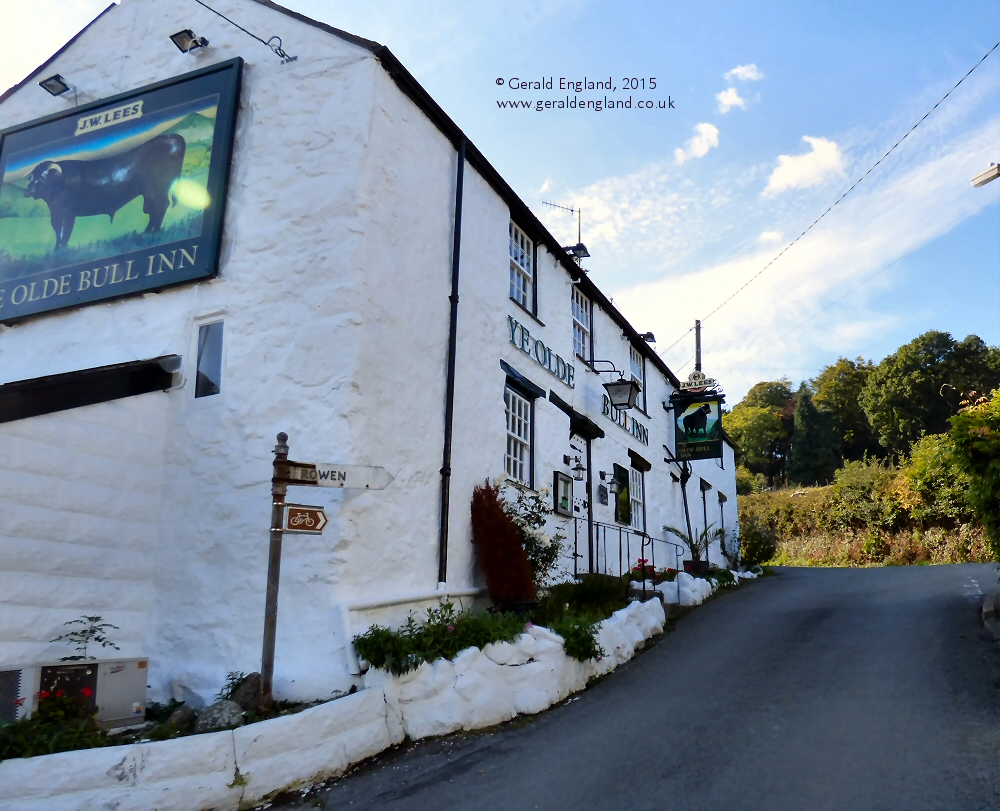
Ye Olde Bull Inn, Llanbedr-y-cennin


According to HistoryPoints this country pub dates from the late 17th century or early 18th. It may have replaced an even earlier hostelry on the site.


The road which climbs past it was used by drovers to take livestock from the mountains to markets further east. The name is thought to relate to the bullocks which hauled carts over the upland tracks. Some were kept at a farm a little further uphill from the pub.


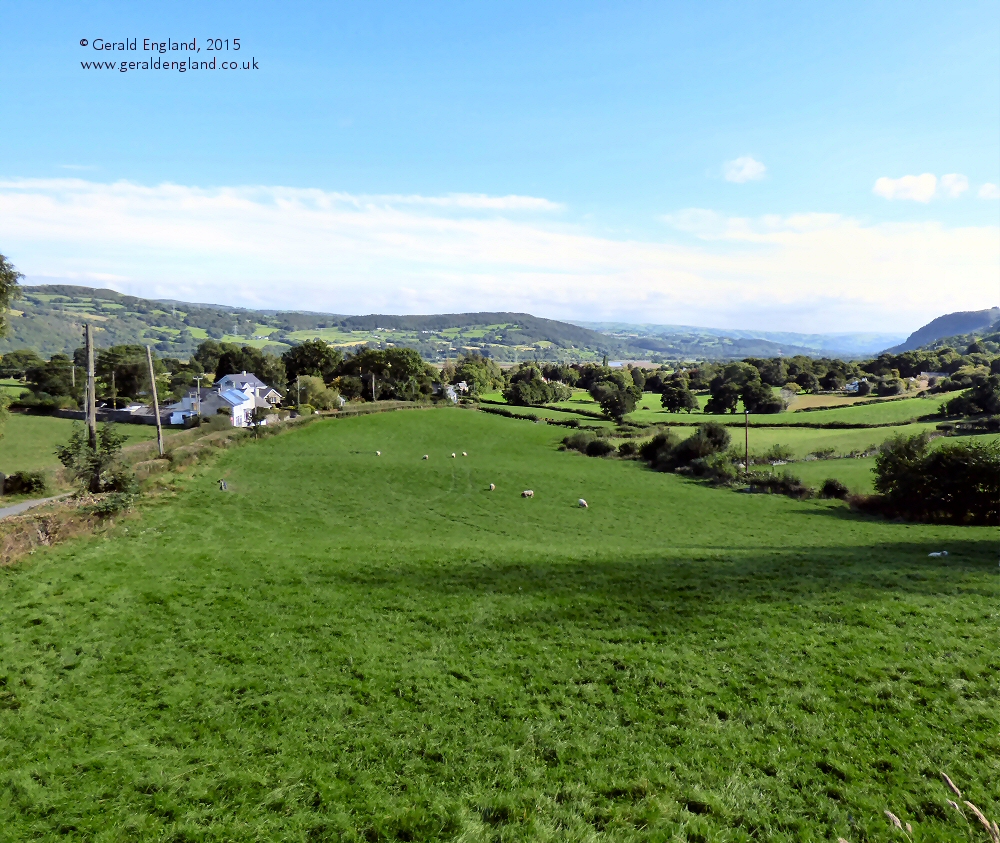
The fields behind the Bull Inn hosted annual sheepdog trials on New Year's Day. Competitors came from as far away as Cumbria and North Yorkshire, until entries grew so large that the competition was restricted, in 1905, to North Wales.


It is a J.W.Lees pub. For current information see its Facebook page.

A contribution to
signs, signs;
Skywatch Friday;
Scenic Weekends.

Tuesday, March 22, 2016

Bench and gorse tree at Moore Nature Reserve


Last week my friend Gordon White took me on a visit to Moore Nature Reserve near Warrington. It comprises almost 200 acres of woodland, meadows, lakes and ponds and is home to many diverse species of plants, animals, birds and other wildlife. Here am I sitting on a bench underneath a gorse tree.


Here is my own photo of the same bench and tree a few moments after Gordon had walked on by.

More information about Moore Nature Reserve can be found on its website.

A contribution to Our World Tuesday and NF Trees and Bushes.

Thursday, March 17, 2016

The Haiku 100 new edition


sunday-morning sex
lasts only as long as the
children's video

© Gerald England.

was my contribution to THE HAIKU HUNDRED.

The Haiku Hundred represented the outcome of the largest haiku event ever staged in the UK. IRON Press, in collaboration with the British Haiku Society, received more than 5,500 submissions when they invited work for this small anthology.

videos are now yesterday's technology and my contribution isn't the only one to reference pre-millennium technology:

On the VDU,
a bright ray of sunshine falls,
and the message fades.

© John Light.


This historic little book was published initially in 1992 and ran to six prints. It sold more than 10,000 copies making it the biggest selling book of English language haiku in the UK. It has been out of print for many years but is now published in a new format with every one of the 100 haiku intact.

Most of the haiku are timeless and some of the authors are no longer with us. One of my favourites is:

drawing a home
with a fenced in yard
the deaf boy

© Francine Porad

ISBN: 978-0-9931245-0-1
Price £5.00
Published in October 2015 by Iron Press
Edited by Peter Mortimer
Cover design by Kate Jones.

Sunday, March 13, 2016

St Hilary's Parish Church, Llanrhos


Access to St Hilary's Parish Church, Llanrhos is via a gated lych gate.


Llanrhos Church in Wales is dedicated to St. Hilary and is in the diocese of Saint Asaph. It is the oldest church in the parish of Llanrhos although the church was extensively rebuilt in 1865.


The practice of Christianity here goes back to the mid 6th Century as Maelgwn King of Gwynedd built the original church on this site. He is said to have later sought sanctuary in the church from the great yellow fever that was spreading throughout the country. He prostrated himself before the altar of the church and prayed for his life, but it was to no avail and he died a few days later.


The original church was replaced in about 1282, (one of the church's fonts dates from the Norman period) and although this medieval church was yet again replaced in the 19th Century it is believed that the Nave and Chancel walls were built by monks from the monastery at Maenan Abbey in the Conwy valley and that the present building incorporates the roof beams and several other features of the late medieval church.


The church was extensively restored between 1820 and 1865 with donations from the Mostyn family, the local landowners who lived at nearby Gloddaeth Hall . They still use the family burial plot in the churchyard. Inside the church, on the west wall, are memorials to the Wynne family of Plas Mawr, Conwy, into which the Mostyns married.


The church is surrounded on all sides by extensive burial grounds.


A guide to locating some of the more signifcant graves can be found on the HistoryPoints.org website.


Also known as SS Eleri & Mary it is one of seven churches in the Rectoral Benefice of Rhos-Cystennin in the Diocese of St Asaph. For current information visit the church website.


These photographs © Gerald England were taken on 16th September 2015.

A contribution to Shadow Shot Sunday and Inspired Sundays.